
Written By Nikki Santangelo, Certified Functional Diagnostic Nutrition Practitioner (FDNP)
The foundational labs I evaluate in every Comprehensive Functional Blood Panel
In last week’s blog, we explored the difference between standard lab work and truly comprehensive testing — and why routine panels are often designed for broad screening rather than early detection of subtle imbalance.
This week, I want to build on that foundation.
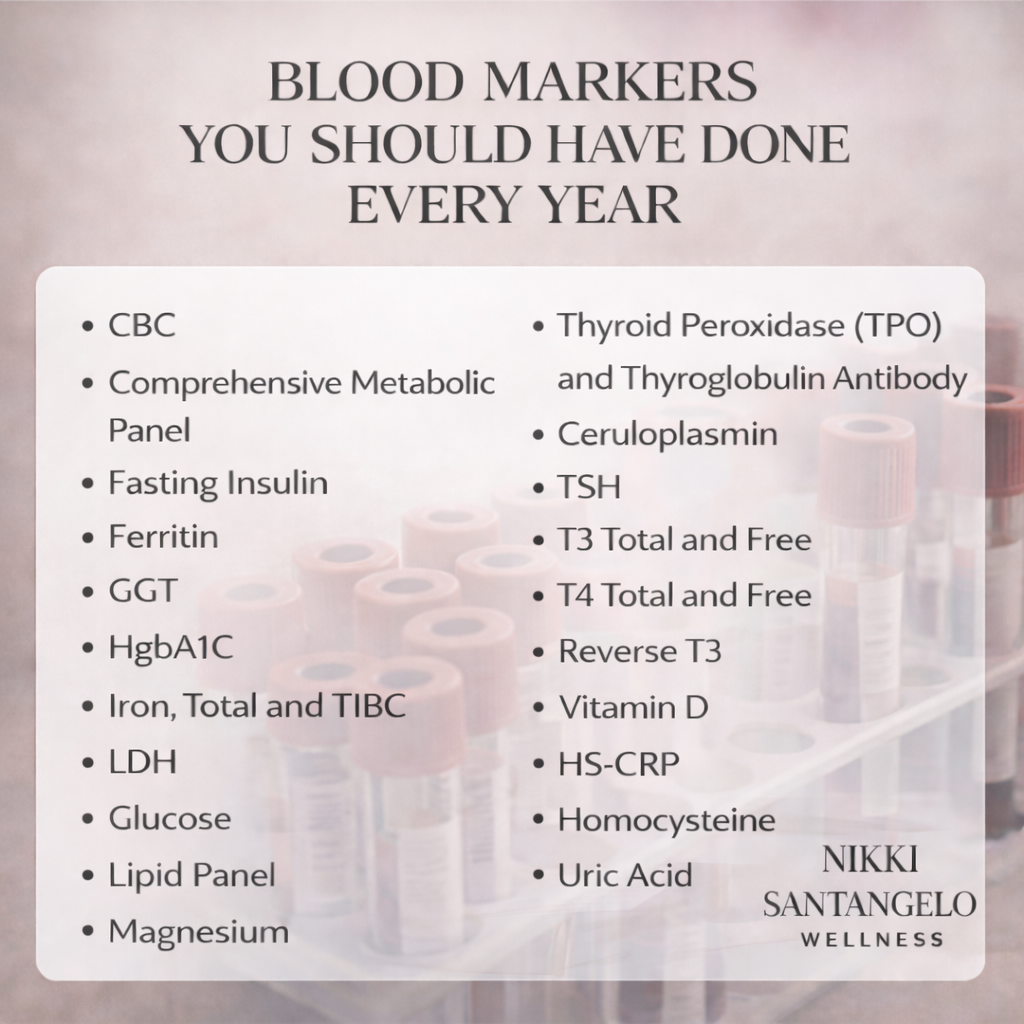
There are specific markers I consider essential when evaluating someone’s overall health. While many labs can provide meaningful insight, there are several that are especially important — yet they are not routinely included in standard annual blood work.
The five markers below represent just a portion of what I evaluate. There are many additional labs that are equally important and often overlooked. However, these foundational markers frequently provide early clues into inflammatory patterns, thyroid conversion inefficiencies, metabolic stress, nutrient insufficiencies, and immune activation.
When evaluated together and interpreted in context, they offer powerful insight into how the body is functioning beneath the surface.
Below are five critical markers that deserve a closer look — and why they matter.
Ferritin: The Iron Storage Marker Often Overlooked
Ferritin measures your stored iron — not just what’s circulating in your blood.
Low or low-normal ferritin levels can contribute to:
- Hair thinning
- Fatigue
- Anxiety
- Shortness of breath
- Cold intolerance
- Impaired thyroid hormone conversion
When ferritin is the only iron marker appearing out of range — while other iron markers such as serum iron, transferrin, TIBC, or UIBC remain within normal limits — it may reflect an issue with iron storage or absorption rather than intake alone.
Chronically low ferritin can be associated with compromised gut integrity. Increased intestinal permeability — often referred to as “leaky gut” — can impair proper nutrient absorption, leading to depleted iron stores over time.
When ferritin is elevated in isolation, it may reflect an inflammatory pattern, often associated with liver stress, or blood sugar dysregulation.
As always, context and pattern evaluation are essential.
Fasting Insulin: An Early Indicator of Metabolic Stress
Most routine blood panels include glucose or A1C.
But insulin is often the earlier and more informative marker.
Insulin can become elevated years before glucose appears abnormal.
Elevated fasting insulin may present as:
- Weight gain despite consistent habits
- Afternoon energy crashes
- Sugar cravings
- Hormone disruption
- Increased inflammatory signaling
By the time glucose is elevated, metabolic dysregulation has often been developing quietly.
Insulin plays a central role in cortisol balance, thyroid signaling, inflammatory pathways, and sex hormone regulation. Early identification allows for earlier intervention.
Reverse T3: Evaluating Thyroid Conversion
It is possible to have a normal TSH and still experience symptoms commonly associated with hypothyroidism.
Reverse T3 is the inactive form of thyroid hormone.
It increases in response to physiological stress, inflammation, illness, and low iron status.
Symptoms may include:
- Fatigue
- Brain fog
- Constipation
- Hair loss
- Feeling cold
If thyroid conversion is impaired, the body may be producing hormone — but not effectively utilizing it at the cellular level.
Without assessing conversion patterns, a significant piece of the thyroid picture may be missed.
CRP: A Marker of Systemic Inflammation
Inflammation is not always overt or painful.
C-Reactive Protein (CRP) measures systemic inflammatory activity within the body.
Even mildly elevated CRP levels can indicate underlying immune activation.
Common contributors to elevated CRP include:
- Low-grade or chronic infections
- Food sensitivities or immune reactivity
- Gastrointestinal inflammation
- Chronic stress exposure
- Ongoing immune system stimulation
Inflammation can influence thyroid signaling, metabolic function, and hormone receptor sensitivity.
When CRP is elevated, the goal is not simply to reduce inflammation temporarily — but to investigate and address the underlying driver contributing to that inflammatory state.
Thyroid Antibodies: Detecting Early Immune Activation
Thyroid antibodies (TPO and thyroglobulin antibodies) can become elevated long before TSH shifts outside of the reference range.
This indicates early autoimmune activity that may not yet be reflected in standard thyroid screening.
Contributors can include stress physiology, gut dysfunction, infections, and chronic inflammatory triggers.
Identifying immune activation early allows for a proactive approach before significant tissue damage occurs.
Prevention is always more effective than reactive management.
Why Context and Patterns Matter
Each of these markers provides valuable information.
However, none of them function independently — and these five are only part of a much larger, interconnected picture.
Ferritin influences thyroid conversion.
Insulin affects inflammatory signaling.
Inflammation alters hormone receptor sensitivity.
Gut integrity impacts nutrient absorption and immune regulation.
The body operates as a coordinated system.
This is why evaluating patterns — rather than isolated numbers — is essential for meaningful interpretation.
My Approach: Annual Comprehensive Functional Blood Panels
My Annual Comprehensive Functional Blood Panel is designed to assess:
- Inflammatory patterns
- Immune function
- Thyroid conversion efficiency
- Blood sugar regulation
- Iron status and nutrient sufficiency
- Stress physiology
- Interconnected lab patterns
- Additional markers often overlooked in routine screening
We evaluate both reference ranges and optimal ranges.
We interpret labs within the context of the whole system.
We identify subtle dysfunction before it progresses into diagnosable disease.
Because true prevention requires depth, strategy, and precision.
If You’re Ready to Take a Deeper Look
If you’re ready to move beyond basic screening and gain a clearer understanding of how your body is functioning, I invite you to schedule your free discovery call to get set up for your Annual Comprehensive Functional Blood Panel.
This is not about ordering more labs unnecessarily.
It is about ordering the right labs, interpreting them comprehensively, and developing a strategic plan based on objective data.
If you missed last week’s foundational article on why standard lab work often overlooks early imbalance, you can click HERE to read it first — it will give you important context for understanding why comprehensive testing makes such a difference.
Testing provides clarity.
Clarity provides direction.
And direction leads to measurable results.